
Industrial Training Institutes (ITI)
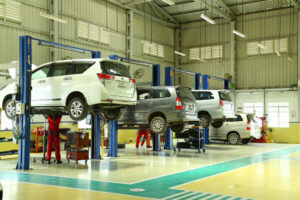

औद्योगिक प्रशिक्षण संस्थान (आईटीआई) भारत में उच्चतर माध्यमिक तकनीकी प्रशिक्षण संस्थान हैं, जो विभिन्न व्यवसायों में प्रशिक्षण प्रदान करने के लिए भारत सरकार के कौशल विकास एवं उद्यमिता मंत्रालय के प्रशिक्षण महानिदेशालय (डीजीटी) के अधीन गठित किए गए हैं।
आईटीआई, शिल्पकार प्रशिक्षण योजना (सीटीएस) चलाते हैं। यह योजना भारत सरकार द्वारा वर्ष 1950 में घरेलू उद्योग के लिए विभिन्न व्यवसायों में कुशल श्रमिकों का निरंतर प्रवाह सुनिश्चित करने, व्यवस्थित प्रशिक्षण द्वारा औद्योगिक उत्पादन को मात्रात्मक और गुणात्मक रूप से बढ़ाने, शिक्षित युवाओं को रोजगारपरक कौशल प्रदान करके उनमें बेरोजगारी कम करने और युवा पीढ़ी के मन में तकनीकी और औद्योगिक दृष्टिकोण विकसित करने के लिए शुरू की गई थी।
राष्ट्रीय स्तर पर प्रशिक्षण योजनाओं का विकास, नीति का विकास, प्रशिक्षण मानक, मानदंड निर्धारित करना, परीक्षा आयोजित करना, प्रमाणन आदि केंद्र सरकार की जिम्मेदारी है, जबकि आईटीआई में प्रवेश सहित दिन-प्रतिदिन का प्रशासन संबंधित राज्य सरकारों/संघ राज्य क्षेत्रों के पास है।वर्तमान में, शिल्पकार प्रशिक्षण योजना के अंतर्गत प्रशिक्षण पाठ्यक्रम देश भर में स्थित 14955 आईटीआई (सरकारी 3248 + निजी 11707) के नेटवर्क के माध्यम से प्रदान किए जा रहे हैं, जिनमें कुल प्रशिक्षुओं की संख्या 26.58 लाख (1 वर्ष और 2 वर्ष की अवधि के ट्रेडों में) एनसीवीटीएमआईएस पोर्टल पर नामांकित है, जिसका उद्देश्य 150 एनएसक्यूएफ अनुरूप ट्रेडों में उद्योग को कुशल कार्यबल प्रदान करना है।हालाँकि, आईटीआई को राज्य कौशल विकास एवं उद्यमिता समिति (एसएसडीईसी) की अनुमति से अल्पकालिक पाठ्यक्रम चलाने की अनुमति है। अल्पकालिक पाठ्यक्रम नियमित सीटीएस पाठ्यक्रम कार्यक्रम से पहले या बाद में चलाए जा सकते हैं।India is a young country. More than 65% of our population is below 35 years of age. This is a big opportunity. But it can also become a problem if our youth are not skilled. Factories need technicians. Industries need trained workers. Homes need electricians, plumbers, AC mechanics, welders, computer technicians.
Who prepares these skilled workers? Industrial Training Institutes (ITIs).
ITI is not just a certificate. It is a powerful tool for building India.
Industrial Training Institutes (ITI) are post-secondary Colleges in India constituted under the Directorate General of Training (DGT), Ministry of Skill Development and Entrepreneurship, Government of India, to provide training in various trades.
After independence in 1947, India needed skilled manpower for industries. Large public sector industries were being set up. There was a shortage of trained technical workers. ITIs run The Craftsmen Training Scheme (CTS). This Scheme was introduced by the Government of India in year 1950 to ensure a steady flow of skilled workers in different trades for the domestic industry, to raise quantitatively and qualitatively the industrial production by systematic training, to reduce unemployment among the educated youth by providing them employable skills, to cultivate and nurture a technical and industrial attitude in the minds of younger generation.
Initially, the focus was on trades like:
- Fitter
- Turner
- Electrician
- Welder
- Mechanic
These trades supported manufacturing and infrastructure development.
Growth in the 1960s–1980s
During this time:
More ITIs were opened across states.
Heavy industries, railways, power plants needed skilled manpower.
ITIs became an important part of technical education.
However, ITIs were often seen as second option after engineering.
This mindset created a gap.
Liberalization Era (After 1991)
After economic reforms:
- Private industries grew rapidly.
- Demand for skilled workers increased.
- Private ITIs started coming up.
But many challenges also appeared:
- Outdated machines
- Old syllabus
- Lack of industry connection
Still, ITIs continued to play a key role in skilling.
Skill India Mission Era (After 2014)
With the launch of Skill India Mission:
- ITIs received more focus.
- Curriculum was updated.
- National Skill Development Mission was strengthened.
- Emphasis was given to employability.
- ITI began to be recognized as a backbone of skilled India.
The development of training schemes at National level, the evolution of policy, laying of training standard, norms, conducting of examinations, certification, etc. are the responsibilities of the central government, whereas, day to day administration including an admission in ITIs rests with the respective State Governments / UTs.
Presently, training courses under the Craftsmen Training Scheme are being offered through a network of 14955 ITIs (Govt. 3248 + Private 11707) located all over the country with total trainees enrolled 26.58 lakhs (in the trades of 1 year and 2 year durations) on NCVTMIS portal with an objective to provide skilled workforce to the industry in 150 NSQF compliant trades.
Strengths of ITIs Today
- Short Duration Courses
Most courses are 1–2 years.
- Practical-Oriented Training
More focus on workshop practice.
- Affordable Fees
Government ITIs are low cost.
- Wide Reach
Available in rural and urban areas.
- Industry-Relevant Trades
New trades like Solar, Mechatronics, EV Technician are introduced.
However the ITIs are allowed to run the short term courses with the permission of State Skill Development & Entrepreneurship Committee (SSDEC). The short term courses can be run before or after the regular CTS Course schedule.
Why ITI Is Very Important for India
India’s development depends on:
- Infrastructure
- Manufacturing
- Renewable energy
- Digital growth
- Construction
- Maintenance services
All these sectors need skilled technicians.
An engineer designs a system. But an ITI technician builds and maintains it.
Without skilled technicians:
- Machines stop.
- Factories slow down.
- Projects get delayed.
So ITIs are foundation stones of development.